Faith, Dirty Grace, and a Whole Lotta Whiskey, Regret, and Resurrection.
Visit my domain to dive face-first into the wild ride of my brain — a mashup of raw truths, dirty jokes, mental fistfights, and midnight rambles you didn’t know you needed.
Saint Dirty Face. Imperfect on purpose. Faithful with fangs. Here to spill it all, laugh at the absurd, and maybe light a match under your too-comfortable chair.
We have more information than any generation in history—and half the time we’re still taking advice from a screenshot posted by somebody with a skull avatar.
The modern world doesn’t have an information shortage.
It has a signal problem.
Everything arrives screaming.
Breaking.
Urgent.
Shocking.
The thing they don’t want you to know—usually brought to you by someone desperately hoping you won’t ask how they know it.
We used to have three television channels, a busy signal, and one family encyclopedia missing the volume containing whatever the hell we actually needed.
Now the combined knowledge of humanity lives in our pockets.
Naturally, we use it to argue with strangers and watch raccoons steal cat food.
Progress.
But all that noise comes at a cost.
When everything demands a reaction, reflection starts feeling irresponsible.
When every disagreement becomes an emergency, we stop distinguishing discomfort from danger.
When repetition is mistaken for truth, the loudest lie gets promoted to common knowledge.
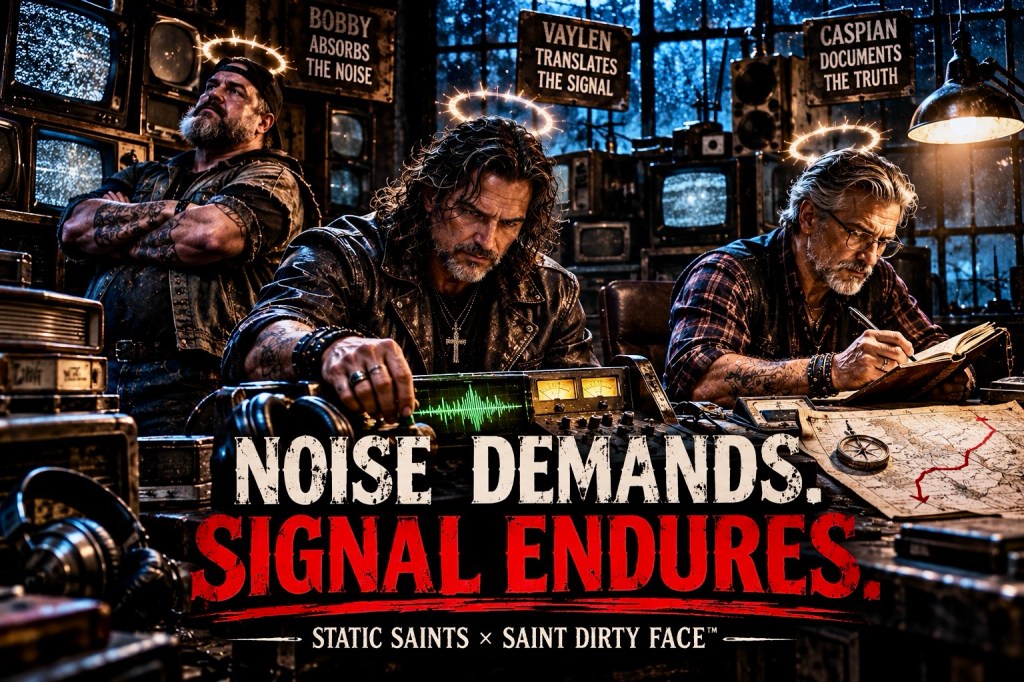
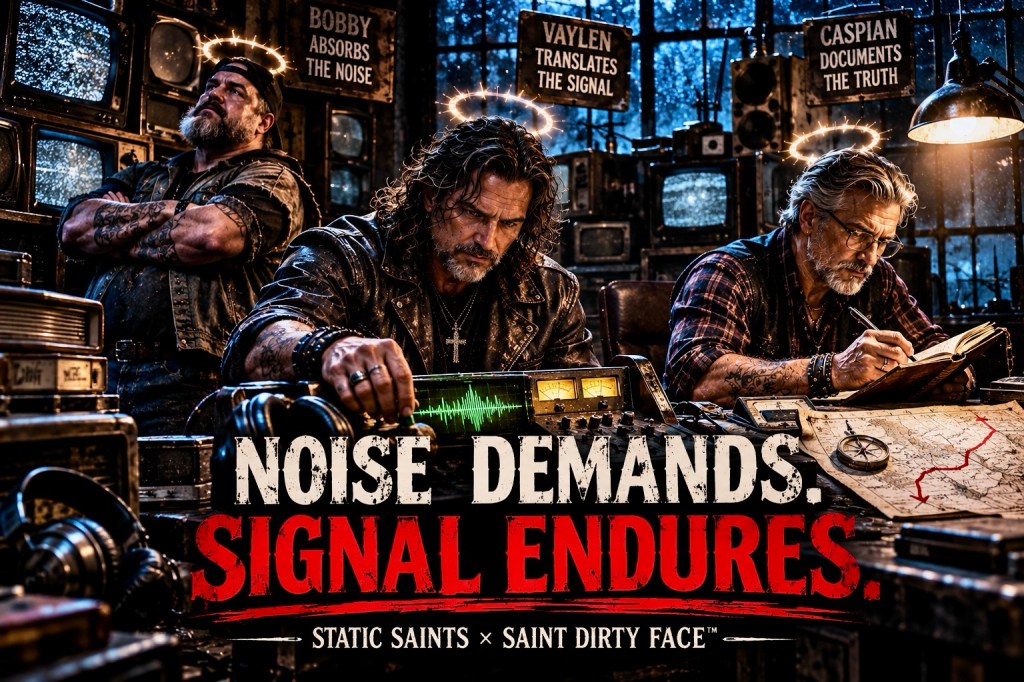
That’s where the Static Saints work begins.
Bobby absorbs the white noise through lived experience.
Not theories.
Not slogans.
The actual human cost beneath them.
Vaylen takes what Bobby carries and separates volume from meaning.
He asks the questions noise hates:
Is it true?
Who benefits from my reaction?
What is missing?
What remains when the anger wears off?
Caspian documents what survives.
Not every opinion.
Not every outrage.
Only the signal worth preserving—so when the noise moves on to its next victim, somebody still remembers what happened.
That isn’t cynicism.
It’s discernment.
Because urgency is not evidence.
Confidence is not competence.
Popularity is not character.
And silence is not automatically wisdom either.
Sometimes silence is cowardice dressed as composure.
Sometimes the truth needs to be spoken clearly, verified carefully, and defended without turning into the very noise it came to correct.
Faith works much the same way.
I’ve rarely found meaning in the people shouting that they alone possess it.
The sacred usually arrives quieter.
A conscience you can’t bargain with.
A hand extended when nobody is filming.
The uncomfortable realization that you might be wrong.
A voice reminding you that truth without compassion becomes another weapon—and compassion without truth becomes permission.
So slow down.
Listen longer.
Verify before repeating.
And don’t surrender your nervous system to everyone demanding immediate access to it.
Noise demands your reaction.
Signal earns your attention.
— THE STATIC SAINTS Bobby absorbs it. Vaylen translates it. Caspian makes sure it doesn’t vanish
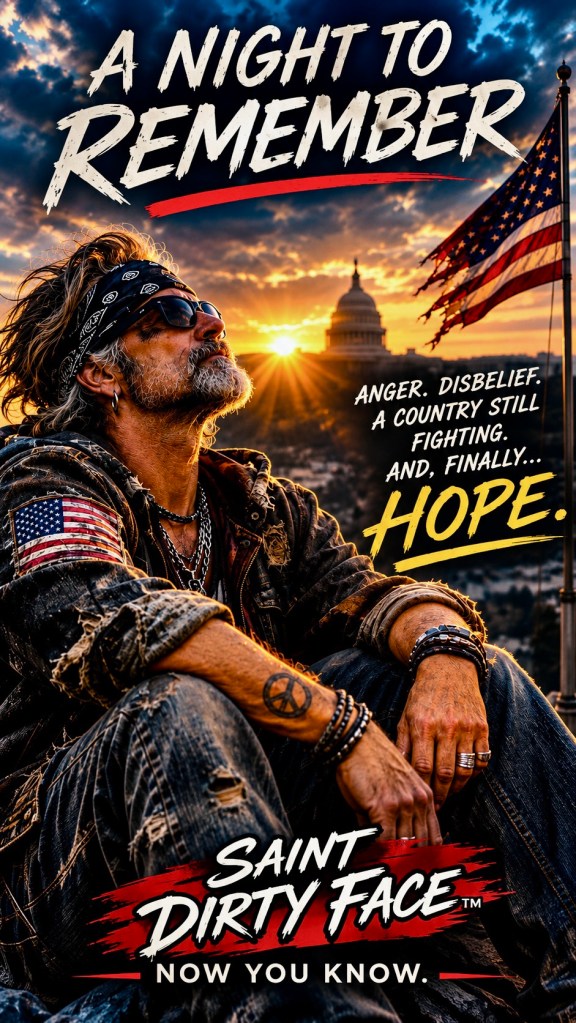
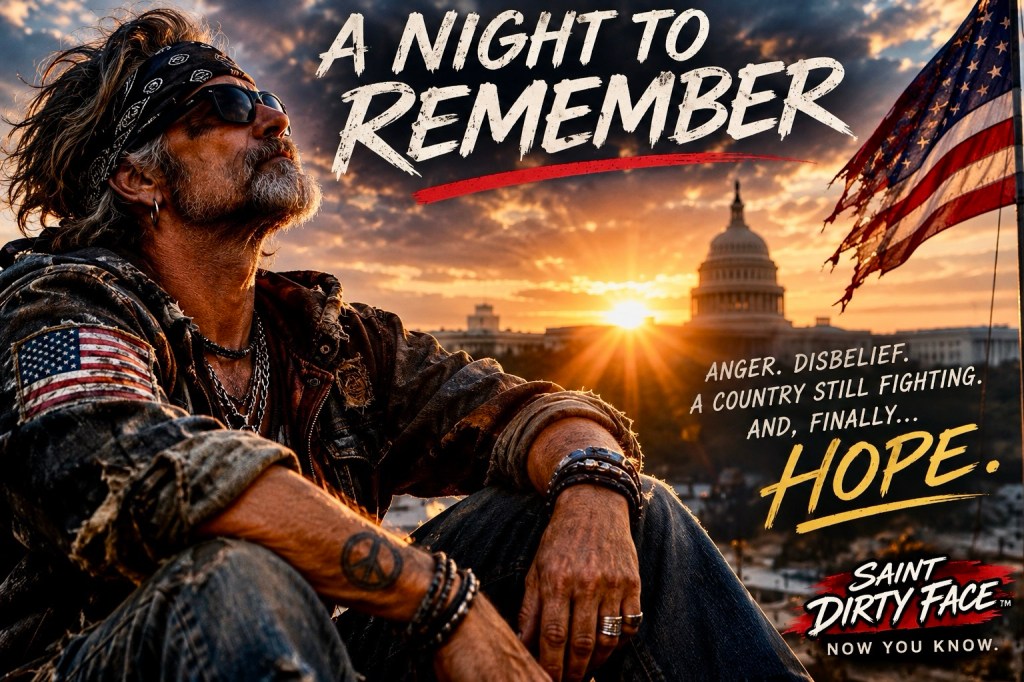
There’s a hell of a lot to unpack after these midterms. Anger. Frustration. Disbelief. And something I wasn’t entirely sure I’d feel again anytime soon.
Hope.
Yeah. That one caught me off guard.
Before we go any further, let’s get something out of the way.
I’m a Democrat.
There. No mystery. No clever disguise. No pretending to be something I’m not just to make somebody comfortable.
I’m not perfect. Never claimed to be. I’ve got my opinions, my flaws, and enough years behind me to know I haven’t always gotten everything right.
But I try.
These are my thoughts. My words. My little corner of the world where I get to say what’s on my mind.
You don’t have to agree with me.
Hell, that’s part of the beauty of living in a free country.
Now, let’s talk about tonight.
Waiting for the Other Shoe to Drop
I went into election night skeptical as hell.
Because how many times have we seen this movie?
The early numbers start rolling in. A little blue here. A little hope there. You start thinking maybe, just maybe, something is changing.
Then the night gets longer.
The map starts turning red.
And there goes that familiar feeling of disappointment.
Same movie. Different election.
So I sat there watching the results, trying not to get my hopes up.
Because after a while, disappointment teaches you to keep your expectations low.
But something felt different.
As the races came in and the political landscape began taking shape, I found myself leaning forward instead of shaking my head.
Could this really be happening?
Could people actually be saying they’ve had enough?
I kept waiting for the other shoe to drop.
And for once, I started wondering whether it actually would.
Let’s Talk About Why People Are Angry
I’m angry.
And not because somebody votes differently than I do.
I’ve been around long enough to know that good people can disagree about politics, shake hands afterward, and still respect each other.
What angers me is watching the country I grew up believing in become a place I sometimes struggle to recognize.
I look at our foreign policy and wonder when diplomacy started taking a back seat to displays of power.
I look at immigration enforcement and wonder whether we’ve forgotten that protecting our borders and respecting human dignity should never be mutually exclusive.
I look at our relationships with longtime allies and neighbors and wonder why cooperation has become something politicians treat like weakness.
I look at the institutions and traditions that once represented stability, accountability, and national pride, and I wonder how much more division they’re expected to withstand.
And then I look at ordinary Americans.
People getting up before sunrise, working their asses off, raising families, caring for aging parents, and trying to stretch a paycheck that doesn’t seem to stretch nearly as far anymore.
People who aren’t asking for mansions, yachts, or private jets.
Just a decent life.
A little breathing room.
A future their children can actually look forward to.
And somewhere in all this noise, I keep coming back to one question.
Who the hell are we doing all this for?
Because government shouldn’t exist to serve egos, reward loyalty, or make the powerful even more powerful.
It should serve the people.
All the people.
Not just the ones who voted for the winning side.
And here’s where I’ll probably surprise a few people.
I don’t believe every Republican is the enemy. I don’t believe every Democrat is the answer.
I’ve seen enough of life to know that putting a letter beside somebody’s name doesn’t automatically make them honorable, competent, or worth trusting.
Character matters.
Accountability matters.
Human decency matters.
And when those things start disappearing from our leadership, we have every right to be angry.
But anger alone doesn’t rebuild anything.
It has to become something useful.
A conversation. A demand for accountability. A willingness to listen.
And when the time comes, a vote.
Because loving your country doesn’t mean pretending everything is fine. Sometimes it means having the guts to say it isn’t.
Well, Look Who Woke Up
And then the election results started coming in.
Races tightening. Longtime political loyalties being challenged. Voters making their dissatisfaction known.
And I sat there watching.
Waiting.
Could this really be happening?
There’s a word politicians and commentators love throwing around.
Woke.
Usually like it’s some kind of insult.
Well, here’s a thought.
Maybe people are waking up to the bullshit.
Maybe they’re tired of being divided, manipulated, frightened, and told to hate their neighbors.
Maybe they’re tired of being treated like idiots.
And maybe, just maybe, they’re remembering that they still have a voice.
Here’s the part I love.
We don’t need violence to prove it.
We don’t need to burn down our neighborhoods.
We don’t need to threaten somebody because they voted differently.
We have something far more powerful.
A ballot.
One person. One vote. A voice that belongs to the voter, not the politician.
That’s how you challenge power in a democracy.
You show up.
You vote.
And you make the people in office answer for what they’ve done.
Don’t Mistake Hope for a Miracle
Now, before somebody thinks I’ve suddenly turned into a wide-eyed optimist, let me clear something up.
I’m Gen X.
We grew up being told to figure it out, shake it off, and keep moving.
We learned early that the world doesn’t hand out happy endings just because you deserve one.
So no, I don’t think one election fixes everything.
Not even close.
The damage I see in our institutions, our relationships, our public trust, and our national reputation didn’t happen overnight.
And it won’t disappear overnight either.
There will be political fights. Broken promises. Disappointments. Probably more than a few moments when I’ll want to throw the remote across the living room.
But tonight reminded me of something.
The country isn’t finished.
There’s still a pulse.
There’s still fight.
There’s still a chance to turn this thing around.
And to the rest of the world watching us stumble through our own mess, I’d like to say something.
Don’t give up on America just yet.
Some of us are still here.
Some of us still give a damn.
Democracy Was Never About Worshipping Politicians
Here’s something that apparently needs repeating.
Democracy isn’t a politician.
It isn’t a political party.
It isn’t a red hat, a blue sign, a campaign slogan, or some loudmouth on television telling you who to hate.
Democracy is the people.
It’s the right to choose who governs us.
It’s the right to question them.
To criticize them.
To demand accountability.
And when they fail to represent us, to vote them out.
That’s the deal.
No kings.
No political royalty.
No elected official above the people they’re supposed to serve.
And no political party gets a lifetime subscription to our loyalty.
Loyalty to your country should never require blind loyalty to its leaders.
That’s not patriotism.
That’s surrender.
And I don’t know about you, but I wasn’t raised to surrender my voice.
The Hard Part Starts Tomorrow
So here we are.
One hell of an election night.
A little disbelief.
A little satisfaction.
And for the first time in a while, a little light coming through the cracks.
But let’s not confuse winning elections with fixing a country.
The real work starts when the campaign signs come down.
When the speeches stop.
When the cameras leave.
That’s when the people we elected have to earn the trust we placed in them.
And that’s when we have to keep paying attention.
Because democracy isn’t something you dust off every two or four years and then shove back into the closet.
It’s a responsibility.
An ongoing one.
We have a long road ahead of us. There’s no magic reset button, no quick fix, and no guarantee that the people we put in office won’t disappoint us.
But tonight gave me a reason to believe that the road is still worth traveling.
Together.
Democrats. Republicans. Independents. And everybody who’s sick of being told they have to hate somebody to love their country.
We don’t have to agree on everything.
We just have to remember that this country belongs to all of us.
And tonight?
For a moment, I felt like the people remembered that.
I started this evening angry. Sad. Frustrated. Wondering what the hell happened to the country I love.
I’m not going to pretend all those feelings disappeared.
They didn’t.
But something else showed up tonight.
Something I hadn’t realized how badly I’d missed.
Hope.
Not the kind politicians sell you in thirty-second commercials.
The kind that sneaks up on you when you’ve almost convinced yourself there’s nothing left to believe in.
Not everything that ended was a failure. Some things simply finished their job.
We’re taught to treat endings like evidence.
The career ended, so you must have chosen wrong.
The friendship faded, so it must never have been real.
The dream changed, so you must have given up.
The old version of you disappeared, so apparently somebody needs to organize a search party.
But life isn’t a contract requiring every meaningful thing to last forever.
Some people walk with us for ten years.
Some for ten minutes.
Some teach us how to survive.
Others teach us what we will never tolerate again.
Both lessons count.
A job can feed your family, sharpen your skills, and introduce you to people who change your life—and still become a place you’re no longer meant to stay.
A friendship can be genuine without being permanent.
A dream can save you during one chapter and suffocate you in the next.
Even identities have expiration dates.
The rescuer.
The angry one.
The dependable one who never needs anything.
The man who keeps wearing armor long after the war has moved somewhere else.
At some point, survival habits start charging rent.
And they are terrible fucking roommates.
Of course, not every ending deserves a poetic explanation.
Sometimes we quit too early.
Sometimes pride burns down something patience could have repaired.
Sometimes we call it “protecting our peace” because “I behaved like an asshole” sounds less spiritual.
When you caused the damage, own it.
Apologize.
Repair what can be repaired.
Learn enough that the wreckage wasn’t wasted.
But don’t confuse accountability with a life sentence.
There comes a point when staying is no longer loyalty.
It’s fear wearing a respectable jacket.
Faith has never promised that every door remains open.
Sometimes the answer isn’t restoration.
Sometimes it’s release.
Sometimes the prayer isn’t “Please put it back.”
It’s “Help me stop digging through the ashes for something You already carried me beyond.”
You are allowed to be grateful for what something was without pretending it still belongs in your life.
You are allowed to honor the road without moving back onto it.
You are allowed to say:
It mattered.
It changed me.
I loved it.
I learned from it.
And now it’s done.
No villain required.
No dramatic closing argument.
No pretending the entire chapter was worthless because it didn’t become the whole damn book.
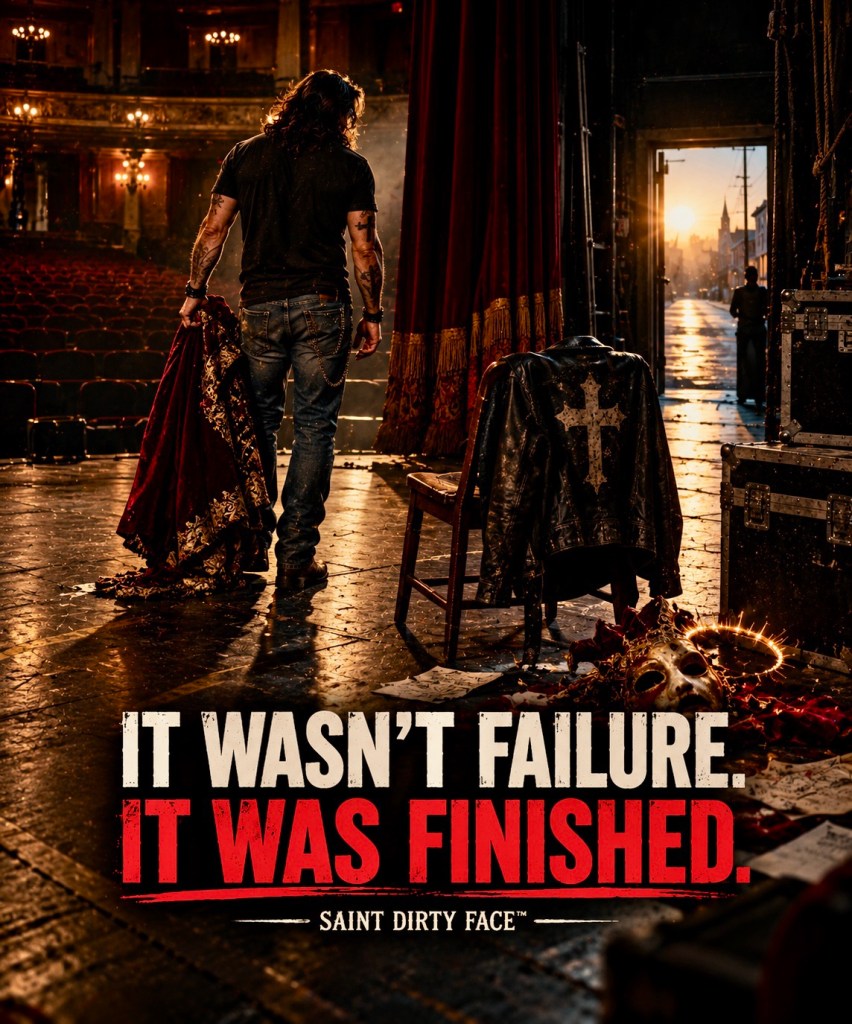
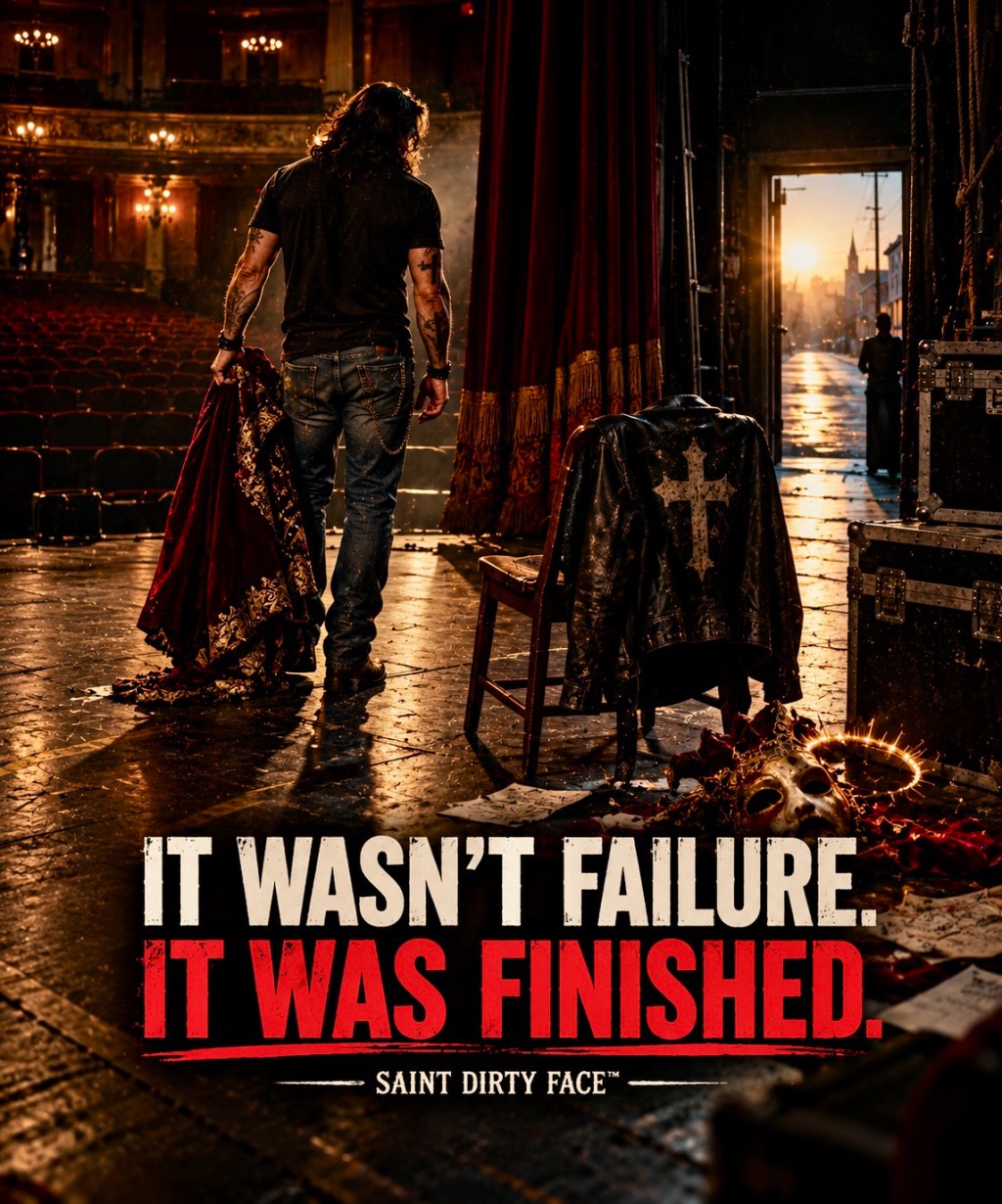
It wasn’t failure.
It was finished.
— SAINT DIRTY FACE™ Imperfect on Purpose. Faithful with Fangs.
Empathy lets us see. Compassion moves us to act. Love is what we choose to do next.
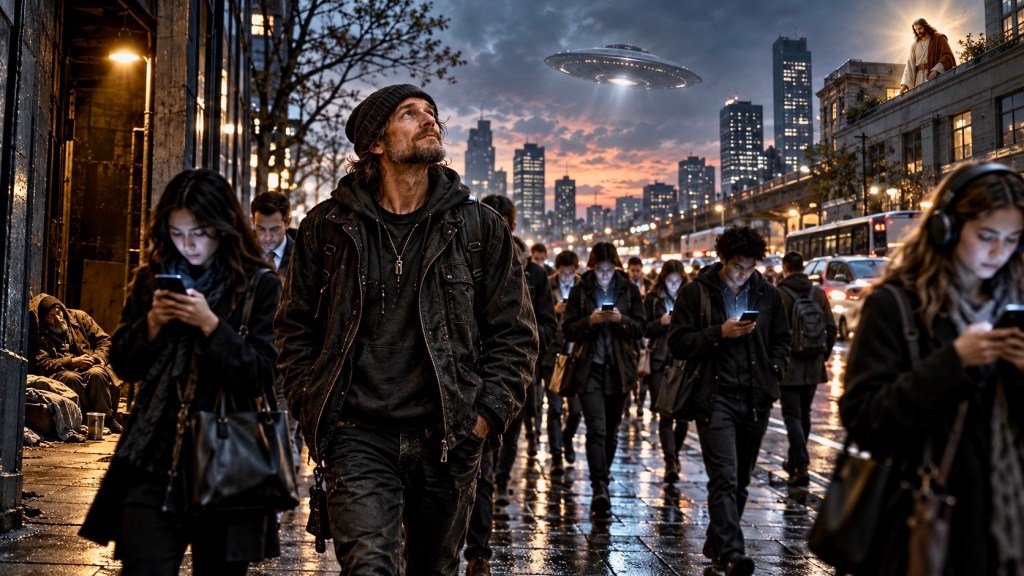
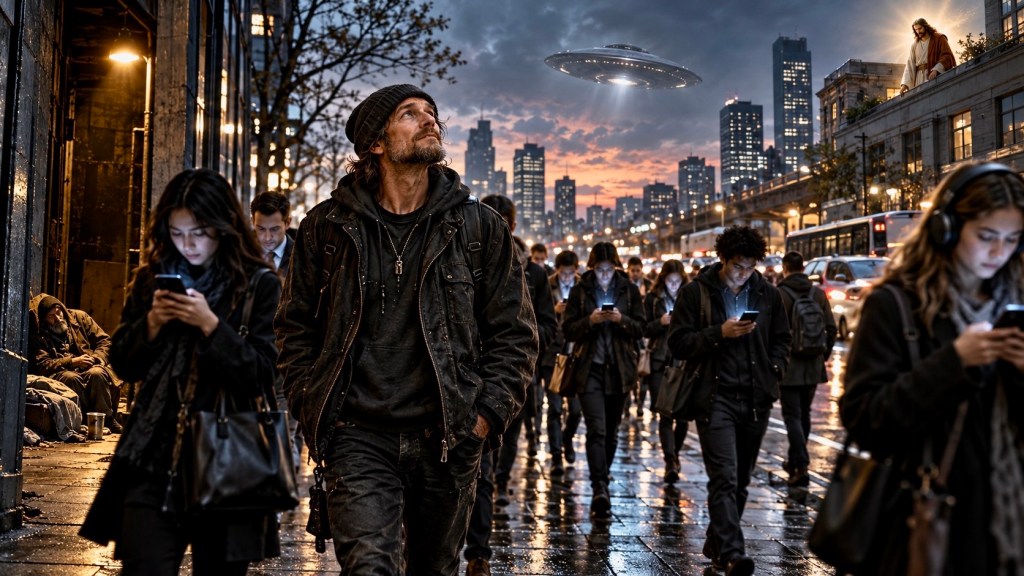
I watched Disclosure Day, and somewhere between the aliens, the secrets, and humanity losing its collective shit, something hit me.
What if this movie was never really about aliens?
What if it was about us?
Not the spaceships. Not little green men. Not whether somebody in Washington has been sitting on the biggest secret in human history.
What if the real disclosure is something humanity has spent thousands of years trying to bury?
Empathy.
Yeah. That little thing we’re all supposedly born capable of, yet somehow treat like an endangered species.
Grab a chair. This one’s going to get uncomfortable.
Bread, Circuses, and a Billion Likes
The Romans had a little trick called panem et circenses.
Bread and circuses.
Keep the people fed. Keep them entertained. Keep them distracted enough, and maybe they won’t question who’s running the show.
Two thousand years later, we’ve upgraded the circus.
Now we’ve got TikTok, Facebook, influencers, outrage merchants, and enough notifications to give a squirrel an anxiety disorder.
We don’t need gladiators anymore.
We’ve got comment sections.
We measure our worth in followers, our opinions in likes, and sometimes our understanding of the world by whatever some jackass managed to squeeze into a sixty-second video.
You can put documented facts in front of someone, and they’ll dismiss them because their favorite influencer said otherwise.
And the saddest part?
We don’t even realize how much of our attention we’ve surrendered.
I’m not saying technology is evil. Hell, I use it every day.
But somewhere along the way, we started confusing being connected with being present.
We have a thousand ways to communicate and still struggle to listen.
What If the Aliens Were Us?
Here’s where Disclosure Day really got under my skin.
There’s a woman in the movie who can look at people and seemingly experience something of their lives.
Their struggles. Their emotions. The things they’re carrying that nobody else notices.
And what does she do with this extraordinary ability?
Does she tell them how to become billionaires?
Does she give them the secrets of the universe?
No.
She tells someone to go to the game because somebody needs them there.
She tells someone else to buy the card.
Simple things.
Ordinary things.
Things that mean absolutely everything to the person waiting on the other side.
And suddenly I had a thought.
What if the aliens were a metaphor for the compassionate side of humanity that we’ve kept locked away?
What if the people terrified of disclosure weren’t afraid of extraterrestrial intelligence?
What if they were afraid of a world where people genuinely understood one another?
Because it’s a hell of a lot harder to exploit someone when you can feel their suffering.
It’s harder to justify cruelty when you understand the pain it causes.
And it’s harder to control people through fear when they start recognizing one another as human beings instead of enemies.
Now, that’s my interpretation. I’m not claiming Spielberg intended every bit of it.
But damn, it makes you think.
You Don’t Know Until You Know
I’ve been a registered nurse for more than three decades.
I’ve seen suffering. I’ve studied diseases. I’ve helped people through some of the worst moments of their lives.
And I used to think I understood PTSD.
I knew the terminology. I understood the clinical side. I thought I understood how people could manage it.
Then I experienced PTSD following my own battle with COVID in 2020.
And brother, let me tell you something.
Knowing about suffering and living through suffering are two entirely different educations.
Things I once thought were controllable suddenly weren’t so simple.
My perspective changed.
Not because everything I’d learned was wrong, but because there was a dimension of the experience I hadn’t understood.
It’s the same reason someone recovering from addiction can sometimes reach another struggling person in a way a textbook never could.
Professional knowledge matters. Absolutely.
But lived experience can open doors that credentials alone cannot.
And that’s why I keep coming back to one question:
How the hell can you teach if you refuse to be taught?
Sometimes the person who changes your understanding isn’t standing behind a podium.
They’re sitting across from you, telling you what their life actually feels like.
All you have to do is shut up long enough to listen.
Maybe We Didn’t Lose Faith in God
There’s another moment in the movie that stayed with me.
A nun suggests that perhaps someone hasn’t lost faith in God.
Perhaps they’ve lost faith in humanity.
Damn.
Now there’s a distinction.
I’ve never believed humanity must be alone in this universe.
If God created a universe filled with countless galaxies, why couldn’t He have created life elsewhere?
Discovering extraterrestrial intelligence wouldn’t disprove God.
It might simply remind us how little we understand about His creation.
And maybe humanity needs that reminder.
We spend so much time congratulating ourselves on being intelligent.
We’ve split atoms. Walked on the moon. Built machines that can process unimaginable amounts of information.
And yet we still struggle with a lesson Jesus taught two thousand years ago.
Love your neighbor.
Not just the neighbor who votes like you.
Not just the neighbor who worships like you.
Not just the neighbor who agrees with everything you say.
Your neighbor.
And love isn’t simply a word we throw around when it’s convenient.
Love requires action.
It requires humility.
It requires recognizing that another person’s pain matters even when we don’t completely understand it.
That’s what I find so compelling about the idea that an advanced civilization might consider empathy its greatest achievement.
Not faster spacecraft.
Not bigger weapons.
Not unlimited wealth.
Empathy.
Maybe we’ve been measuring advancement with the wrong damn ruler.
Praying for Time
In 1990, George Michael released Praying for Time.
Think about that.
1990.
Before TikTok. Before smartphones. Before social media turned every disagreement into a spectator sport.
And he was already singing about greed, poverty, indifference, and a world losing its moral compass.
Listen to that song today.
It doesn’t sound like a warning about some distant future.
It sounds like the evening news.
But I hear something else in that title.
Praying for Time.
Yes, we’re praying because we’ve made a mess of things.
But we’re also praying for more time because maybe, just maybe, we can still fix this.
We haven’t lost our capacity for compassion.
We’ve buried it beneath noise, distractions, pride, and the endless pursuit of more.
More money.
More followers.
More attention.
More stuff.
When was the last time we stopped long enough to ask whether any of it was making us happier?
Or kinder?
Or better human beings?
Put the Damn Phone Down
Here’s something to think about.
You can text somebody “I love you” a hundred times a day.
Hearts. Kisses. Cute little emojis.
Beautiful.
But what happens when you get home?
Do you put the phone down?
Do you look that person in the eyes?
Do you ask how their day went—and actually listen to the answer?
Do you show up for the game?
Buy the card?
Sit beside someone who’s hurting without immediately trying to fix them?
Because if we’re constantly announcing our love but never making ourselves available to demonstrate it, what exactly are we doing?
Is it love, or just another reassurance algorithm?
I’m not suggesting we throw away our phones and return to the Stone Age.
I like indoor plumbing and antibiotics as much as the next guy.
I’m saying we need to remember what all this progress was supposed to be for.
Go outside.
Enjoy the scenery.
Have dinner without a screen between you and your family.
Listen to your kids.
Hold your spouse.
Visit your parents while you still can.
Stop and smell the actual fucking rose instead of taking a picture of it for strangers to like.
Because someday, the notifications will stop.
And the people who mattered won’t remember how many followers you had.
They’ll remember whether you were there.
The Real Disclosure
Maybe someday we’ll discover we’re not alone in the universe.
Maybe we’ll find life on another world.
Maybe some of the mysteries we’ve debated for centuries will finally have answers.
I don’t know.
But I know this.
We don’t need extraterrestrials to teach us how to listen.
We don’t need advanced technology to tell someone they’re loved.
And we don’t need a message from the heavens to understand that greed, hatred, and cruelty are destroying things we should be protecting.
We’ve already been given the capacity to choose differently.
Call it faith.
Call it free will.
Call it being human.
Whatever you call it, we have a responsibility to use it.
And maybe the real lesson of Disclosure Day isn’t that humanity needs to prepare for visitors from another world.
Maybe it’s that we need to prepare to finally recognize one another.
Because the greatest undiscovered frontier may not be somewhere beyond the stars.
It may be the distance between knowing how to love and actually choosing to do it.
So here’s my challenge.
Today, put the phone down.
Look someone in the eyes.
Ask how they’re doing.
And for once in your life, don’t just wait for your turn to speak.
Listen.
You might discover an entire world you never knew existed.
And you won’t need a spaceship to get there.
Empathy lets us see. Compassion moves us to act. Love is what we choose to do next.
We’re still praying for time.
Let’s make sure we do something worthwhile with it.